Anion Gap Calculator with Blood Sodium Input
What’s the Anion Gap?
The anion gap is a measure computed from common electrolytes in the blood. It can reveal whether there may be an disruption in ions that affects acid-base balance. In routine practice, the result is often obtained from a standard blood chemistry or electrolyte panel that includes sodium, chloride, and bicarbonate-related measurements.
Because the anion gap shows the relationship between major serum electrolytes, it can act as a useful diagnostic clue when evaluating an acid-base disorder. A altered value may point toward an underlying issue such as metabolic acidosis, but it is not a diagnosis by itself. Instead, it supports clinical interpretation alongside the rest of the lab result, the patient’s history, and a broader medical assessment.
In basic terms, the anion gap compares the principal positively charged ions and the main negatively charged ions measured in the blood. Because sodium and chloride are among the most important measured ions, changes in these values can significantly affect the calculated gap. That is why an anion gap calculator that uses blood sodium input can be handy for fast checking and for seeing how the result changes with different electrolyte patterns.
In what way this Anion Gap Calculator Operates
This anion gap calculator is a simple utility that uses your blood sodium input along with the chloride level and bicarbonate level to estimate the gap. The calculator pulls values from an electrolyte panel and follows the standard anion gap formula so you can calculate anion gap quickly and consistently.
The calculator is not meant to substitute for professional evaluation. It is a screening tool that can support you understand a lab result and see whether the number falls in a usual reference range. In many cases, the calculator can also spot an electrolyte imbalance that may require further review.
Most versions of the calculator ask for:
- Serum sodium
- Serum chloride
- Serum bicarbonate
Certain tools may refer to bicarbonate as total CO2, depending on the lab report. Once you input these values, the calculator estimates the anion gap and can assist you to interpret whether the result suggests a typical pattern, a high anion gap, or a low anion gap.
A practical advantage of using a calculator is that it makes the process easy. You do not need to learn by heart every detail of the formula to interpret the result. Still, knowing how the calculator works makes it more manageable to interpret lab values and spot when the pattern may indicate an acid-base issue.
Anion Gap Formula and Inputs
The standard formula for the anion gap is:
Anion gap = serum sodium - (serum chloride + serum bicarbonate)
This method uses serum sodium as the initial value, then subtracts the sum of serum chloride and serum bicarbonate. The result is a number that shows unmeasured ions in the bloodstream.
When using the calculator correctly, it is important to enter accurate values from the electrolyte panel. Even minor entry mistakes can change the result and lead to the wrong interpretation. For that reason, checking the units and checking the exact numbers from the lab report is a key part of using any medical calculator.
Here is a basic way to think about the inputs:
- Serum sodium stands for the major measured positive ion.
- Serum chloride is one of the main measured negative ions.
- Serum bicarbonate reflects the buffer system and is commonly used to assess acid-base status.
When these values are entered, the calculator produces a corrected estimate of the gap from the available serum electrolytes. It may function as an early signal that more evaluation is needed, especially if the clinical picture suggests metabolic acidosis or another acid-base disorder.
Some clinicians also use an albumin adjustment when interpreting the number, because albumin can influence the apparent gap. That means the calculated result may be refined by looking at a corrected value rather than the raw number alone, especially when albumin is low.
How to Read the Result
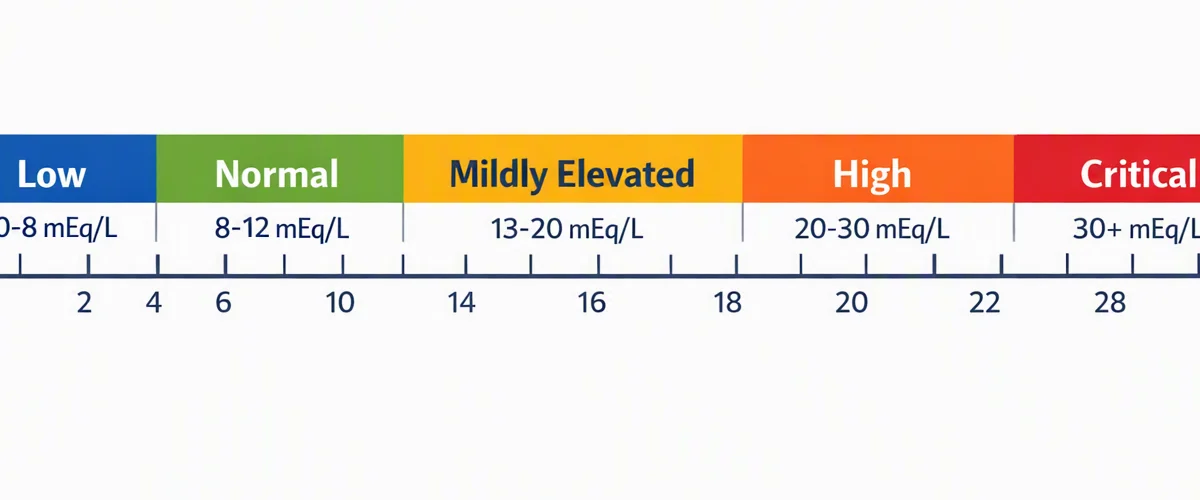
Understanding the result requires the full picture. One value can be useful, but the meaning depends on the normal range, the patient’s condition, and other lab findings. The anion gap is best viewed as part of the larger picture of clinical interpretation.
A usual value may be considered within the expected normal range, but the exact cutoff can vary based on the lab and the calculation method. Some labs use different analyzer methods or reference values, so the same result may be read differently depending on the report.
A high anion gap often suggests that unmeasured acids are present in the blood. This is commonly associated with metabolic acidosis, though the full diagnosis depends on symptoms, history, and other tests.
A low anion gap is not as frequent, but it can still be meaningful. It may reflect low albumin, measurement issues, or certain medical conditions. Because a low value can sometimes be overlooked, it is worth reviewing carefully rather than dismissing it automatically.
The best way to interpret anion gap results is to combine the number with the rest of the lab result, symptoms, and clinical context.
In practice, the gap is a valuable diagnostic clue, not a standalone answer. It can help identify whether additional testing is needed, whether the pattern fits a known acid-base disorder, and whether the patient’s acid-base balance may be shifting in an important way.
Common Causes of a raised anion gap
A high anion gap usually means there are additional acids in the blood or lower bicarbonate levels than expected. This finding is often seen in acid buildup, where the body accumulates acid or depletes its buffering power faster than it can compensate.
Common causes are:
- Excess lactate, which can occur when tissues do not get enough oxygen or when lactate builds up for other reasons.
- Acid buildup from ketones, which may happen when the body produces excess ketones from fat breakdown.
- Impaired kidney function, where impaired filtration allows acids to accumulate.
These causes are important because they change the overall acid-base balance and often require prompt medical attention. A high result can be a sign that the body is not handling acids normally, which is why the anion gap is often used as an early screening tool in patients with concerning symptoms or abnormal labs.
As an example, in lactic acidosis, the body may create more lactate than it can clear. In ketoacidosis, ketone bodies add to the unmeasured acid load. In kidney failure, acid excretion is impaired, which can lead to a rising gap. Each of these conditions can create a recognizable laboratory pattern that helps guide further evaluation.
Although a high anion gap can point toward a serious issue, it still needs clinical interpretation. The same number may mean something different depending on the patient’s symptoms, other blood chemistry values, and medical history.
Typical Causes of a Low Anion Gap
A decreased anion gap is less common than a elevated one, but it can still be medically significant. In a lot of cases, it is related to testing issues or a shift in one of the main proteins in blood, especially albumin.
One of the most common causes is hypoalbuminemia, which means decreased albumin. Since albumin carries a negative electrical charge, a drop in albumin can decrease the calculated gap. This is why an adjustment for albumin may be needed when interpreting the result. Without that adjustment, the raw number may underestimate the true acid-base balance.
Laboratory error is another important possibility. A specimen problem, reporting issue, or analyzer variation can produce an unusual value. If the result does not fit the clinical picture, rechecking the test or reviewing the original laboratory result may be appropriate.
Another cause is multiple myeloma, a condition that can change blood proteins and affect the anion gap. In such cases, abnormal proteins may shift the balance of measured and unmeasured ions, leading to a below-expected result.
Because a low result may reflect anything from a simple measurement issue to a serious condition, it should always be interpreted in context. The number alone does not tell the whole story, but it can lead to a more careful interpret anion gap medical assessment when needed.
When to Seek Medical Guidance
An abnormal anion gap should be brought up with a healthcare provider when it is paired with worrisome symptoms, significant shifts in other lab results, or a known medical condition. The number itself is informative, but it is not sufficient to determine the cause without more evaluation.
Seek guidance promptly if the result is paired with symptoms that suggest serious illness, such as progressive confusion, rapid breathing, severe fatigue, vomiting, dehydration, or reduced alertness. These signs may indicate a significant acid-base problem or another urgent issue.
It is also important to contact a healthcare provider when the result reaches critical values or when the pattern does not match the patient’s situation. For example, a marked high anion gap may need immediate evaluation, especially if it suggests lactic acidosis, ketoacidosis, or kidney failure.
If you are reviewing your own test results, remember that an anion gap is only one part of the workup. The provider may look at serum electrolytes, kidney function, glucose, ketones, albumin, and other data to understand the full picture. That broader medical assessment is what turns a number into a useful answer.
In short, use the calculator as a guide, but trust professional review when results are abnormal or symptoms are present.
FAQ: Anion Gap Calculator
What is a normal anion gap?
A normal anion gap is the interval the testing lab views usual for its process and normal range. The exact cutoff can vary, so it is best to compare the calculator result with the lab’s listed normal range. A result inside that range usually suggests no significant unmeasured acid buildup, but the full clinical interpretation still depends on the rest of the blood chemistry.
How do you calculate the anion gap using sodium, chloride, and bicarbonate?
You use the anion gap formula: serum sodium minus the sum of serum chloride and serum bicarbonate. In other words, anion gap = sodium - (chloride + bicarbonate). The anion gap calculator calculates it for you when you enter the blood sodium input plus the other electrolyte values from the panel.
Why is the anion gap high in metabolic acidosis?
In metabolic acidosis, the body may retain acid or reduce bicarbonate. When extra acids are present, they are not always measured directly on the routine panel, so the high anion gap reflects those unmeasured ions. This is why the gap can be a helpful diagnostic clue for lactic acidosis, ketoacidosis, or kidney failure.
Can low albumin affect the anion gap result?
Yes. Hypoalbuminemia can decrease the measured gap because albumin contributes negative charge. In that situation, an albumin adjustment may be needed to estimate a more accurate corrected value. If albumin is low, the raw result may make the gap look smaller than it truly is.
When should an abnormal anion gap be evaluated by a healthcare professional?
An abnormal result should be reviewed by a healthcare provider when it is paired with symptoms, when other lab results are abnormal, or when the value is near critical values. A professional should also review unexpected results because lab error is possible, and because conditions such as multiple myeloma, lactic acidosis, ketoacidosis, or kidney failure may need further testing and treatment.