Calculating Albumin-Corrected Anion Gap
What Is the Anion Gap?
The anion gap is a derived value used to evaluate acid-base status and spot certain causes of metabolic acidosis. It examines the main measured cations and anions in a routine electrolyte panel, usually using sodium, chloride, and bicarbonate. Because not all ions are directly measured, the anion gap helps approximate the amount of unmeasured anions in the blood.
Clinically, the anion gap is a valuable diagnostic tool for identifying an acid-base disorder. A change in the measured anion gap can suggest a metabolic derangement such as high anion gap metabolic acidosis or, in some cases, normal anion gap metabolic acidosis. The result must always be interpreted in context with the full electrolyte panel and other laboratory values.
At its core, the anion gap reflects electrochemical equilibrium. If there are extra unmeasured acids in the blood, the gap can increase. If the balance is altered by changes in albumin or other proteins, the gap may appear reduced than expected even when clinically important abnormalities are present.
How Albumin Matters in the Anion Gap
Albumin is the most plentiful protein in plasma and acts as a primary protein anion. Because it carries a negative charge, albumin contributes substantially to the measured anion gap. When serum albumin is low, the anion gap may be falsely reduced even though unmeasured anions are still present.
This is why hypoalbuminemia matters. Low albumin can obscure a significant acid-base disorder by lowering the measured anion gap. In practical terms, a patient with low albumin may have a “normal” gap that is actually abnormal after correction. That is where albumin correction becomes crucial for precise clinical interpretation.
Albumin correction enhances lab interpretation by accounting for the missing negative charge from low albumin. Without adjustment, clinicians may overlook the presence of unmeasured anions and fail to notice an important clue to metabolic acidosis. The corrected value gives a better picture of the patient’s acid-base status.
Albumin-Corrected Anion Gap Equation
This correction method frequently used modifies the measured anion gap based on the serum albumin level. One common version is:
Adjusted anion gap = measured anion gap + 2.5 × (4.0 − serum albumin in g/dL)
This formula assumes a reference albumin of 4.0 g/dL. For each 1 g/dL drop in serum albumin below 4.0, the corrected value increases by about 2.5 mEq/L. That correction helps return the corrected value closer to what it would be with normal protein anion contribution.
The reference interval for the normal anion gap can vary slightly depending on the laboratory, analyzer, and method used. Because of this, the correction formula should be interpreted alongside local reference range information and the patient’s broader clinical picture.
Some facilities use somewhat different albumin correction approaches, but the goal is the same: estimate the true gap calculation after accounting for low albumin. The corrected anion gap is especially helpful when evaluating acidemia and suspected high anion gap metabolic acidosis.
How to Work With an Anion Gap Calculator
An Anion Gap Calculator makes easier the process by automatically using sodium, chloride, bicarbonate, and albumin to provide both the measured anion gap and the corrected anion gap. This is particularly helpful when multiple laboratory values need to be interpreted quickly and consistently.
To use an anion gap calculator, input the key components from the electrolyte panel:
- Sodium level
- Chloride value
- Bicarbonate reading
- Serum albumin reading, if albumin correction is needed
The calculator initially performs the gap calculation using the standard anion gap formula, then performs albumin correction if indicated. This helps translate the measured anion gap into a corrected value that better shows ion balance and unmeasured anions.
For example, if the serum albumin is low, the anion gap calculator can show whether a seemingly normal result is actually elevated after adjustment. That makes it a useful tool for clinical interpretation, especially in patients with complex acid-base disorder patterns.
Step-by-Step Worked Example
Here is a straightforward sample calculation using common lab values. Assume the laboratory values are:
- Sodium: 140 mEq/L
- Chloride: 104 mEq/L
- Bicarbonate: 20 mEq/L
- Serum albumin: 2.5 g/dL
First, calculate the measured anion gap:
Anion gap = sodium − (chloride + bicarbonate)
Applying the values above:
140 − (104 + 20) = 140 − 124 = 16 mEq/L
Next, apply the adjustment formula for albumin:
Corrected anion gap = measured anion gap + 2.5 × (4.0 − serum albumin)
Insert the serum albumin value:
Corrected anion gap = 16 + 2.5 × (4.0 − 2.5)
Corrected anion gap = 16 + 2.5 × 1.5 = 16 + 3.75 = 19.75 mEq/L
This worked example shows how reduced albumin can hide a more substantial gap. The measured anion gap was already somewhat elevated, but the corrected value is even more elevated and more clearly suggests a high anion gap metabolic acidosis pattern. A calculator or formula-based approach reduces error and enhances consistency during lab interpretation.
Interpreting a Adjusted Anion Gap
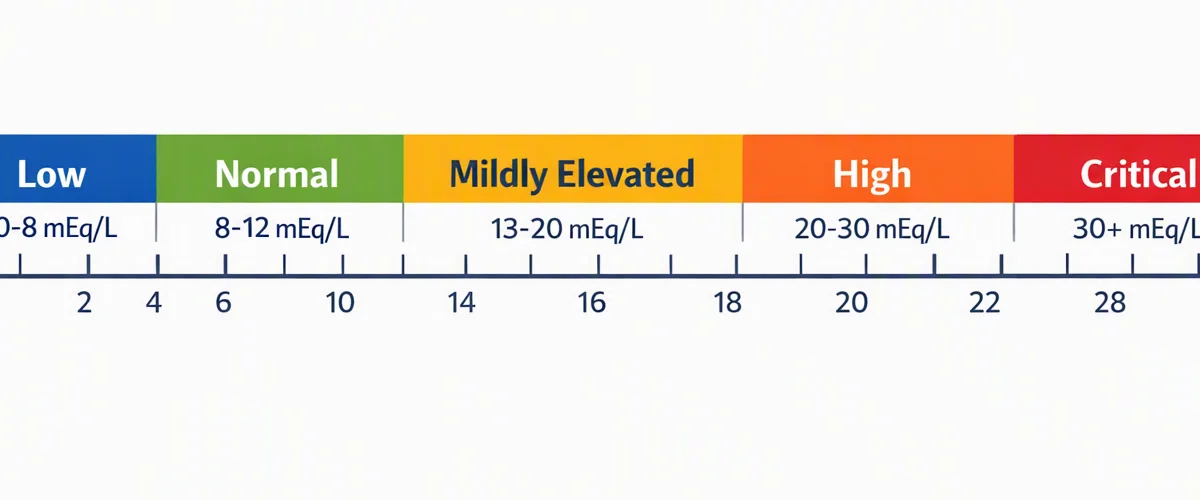
Assessing the corrected anion gap starts from the reference range or laboratory reference interval used by the testing lab. When albumin correction is applied, the corrected value should be evaluated against that reference range instead of the unadjusted number alone.
A elevated anion gap after correction implies that unmeasured anions are present and that a high anion gap metabolic acidosis may be present. Frequent acid-base disorders in this category include lactic acidosis, ketoacidosis, and renal failure-related acidosis. The corrected result is especially useful when serum albumin is low because the measured anion gap may otherwise downplay the severity of the disturbance.
A normal corrected value may mean that the apparent elevation was mainly due to baseline variation or that the clinical issue lies elsewhere. In some cases, a patient may have normal anion gap metabolic acidosis instead, meaning bicarbonate loss is countered by chloride retention rather than accumulation of unmeasured acids. That distinction makes a difference for clinical interpretation and treatment planning.
Remember that the corrected value is not a diagnosis by itself. It is part of the overall assessment of acid-base balance, which includes symptoms, medication history, kidney function, and the full set of laboratory values.
Frequent Sources of an Abnormal Anion Gap
Various disorders can raise the anion gap by increasing unaccounted-for anions. Out of the most important are lactic acidosis, ketoacidosis, and renal failure. These disorders often cause metabolic acidosis with a high anion gap and can progress quickly if not recognized.
Lactic acidosis occurs when lactate collects due to impaired tissue oxygen delivery, shock, severe infection, seizures, or other metabolic stress. The excess lactate adds to acid accumulation and decreases bicarbonate.
Ketoacidosis is frequently seen in uncontrolled diabetes, prolonged fasting, or heavy alcohol use. Ketone bodies serve as unmeasured anions and raise the gap calculation.
Renal failure can increase the anion gap because the kidneys are unable to eliminate organic acids effectively. As acid accumulates, bicarbonate falls and the measured anion gap goes up.
Additional causes may include toxins, medications, or mixed metabolic conditions. Because the corrected anion gap accounts for both the measured anion gap and albumin correction, it can assist determine whether the apparent abnormality is real or partly explained by low albumin.
Constraints and Clinical Considerations
Although useful, the anion gap has major limitations. Laboratory variation can alter the result, especially when multiple analyzers or measurement methods are used. That is why the same patient may have marginally different results across settings. The reference interval should always be interpreted in context with the local laboratory method.
Concurrent disorders can also obscure interpretation. A patient may have more than one acid-base disorder at the same time, such as metabolic acidosis combined with vomiting or respiratory changes. In those cases, the corrected anion gap may better reveal hidden pathology, but it still must be interpreted with the full clinical picture.
Another key issue is electrolyte imbalance. Shifts in sodium, chloride, or bicarbonate can influence the measured anion gap and make the result less straightforward. A low albumin state may further distort the picture, so albumin correction is helpful but not perfect.
The best approach is to view the corrected anion gap as one part of comprehensive lab interpretation. It is a valuable diagnostic tool, but it does not replace clinical judgment, repeat testing when needed, or evaluation of the underlying cause of acid-base disorder.
FAQ
What is the formula for albumin-corrected anion gap?
A commonly used correction formula is: corrected anion gap = measured anion gap + 2.5 × (4.0 − serum albumin in g/dL). This adjusts the measured value for low albumin and helps estimate the true gap calculation more accurately.
Why do you correct the anion gap for albumin?
You correct the anion gap for albumin because albumin is a major protein anion. When serum albumin is low, the measured anion gap can appear falsely normal or low. Albumin correction improves clinical interpretation by accounting for this missing negative charge.
What is the normal anion gap range?
The normal anion gap range depends on the laboratory and the analyzer used, so the reference range may vary. Many labs provide https://penzu.com/p/477fa3b68887bb69 their own reference interval, and that local range should guide interpretation rather than a single universal number.
How does low albumin affect the anion gap?
Low albumin decreases the measured anion gap because there are less negatively charged protein anions in the blood. That can mask a true increase in unmeasured anions and make a high anion gap metabolic acidosis appear less obvious than it actually is.
When is it appropriate for an anion gap calculator be used?
An Anion Gap Calculator should be used when you want a fast, accurate way to interpret an electrolyte panel, especially when serum albumin is low or acid-base balance is unclear. It is especially helpful in suspected metabolic acidosis, when corrected value analysis can support lab interpretation and support the assessment of acid-base disorders.